Stone Walkway Installation for Gardens and Entries

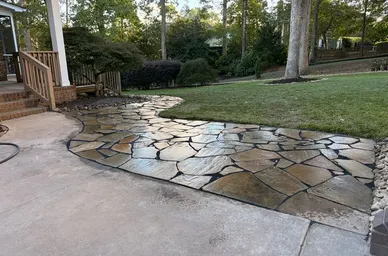
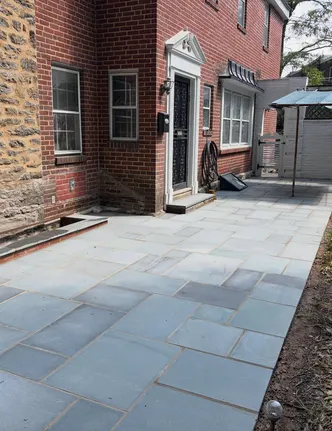
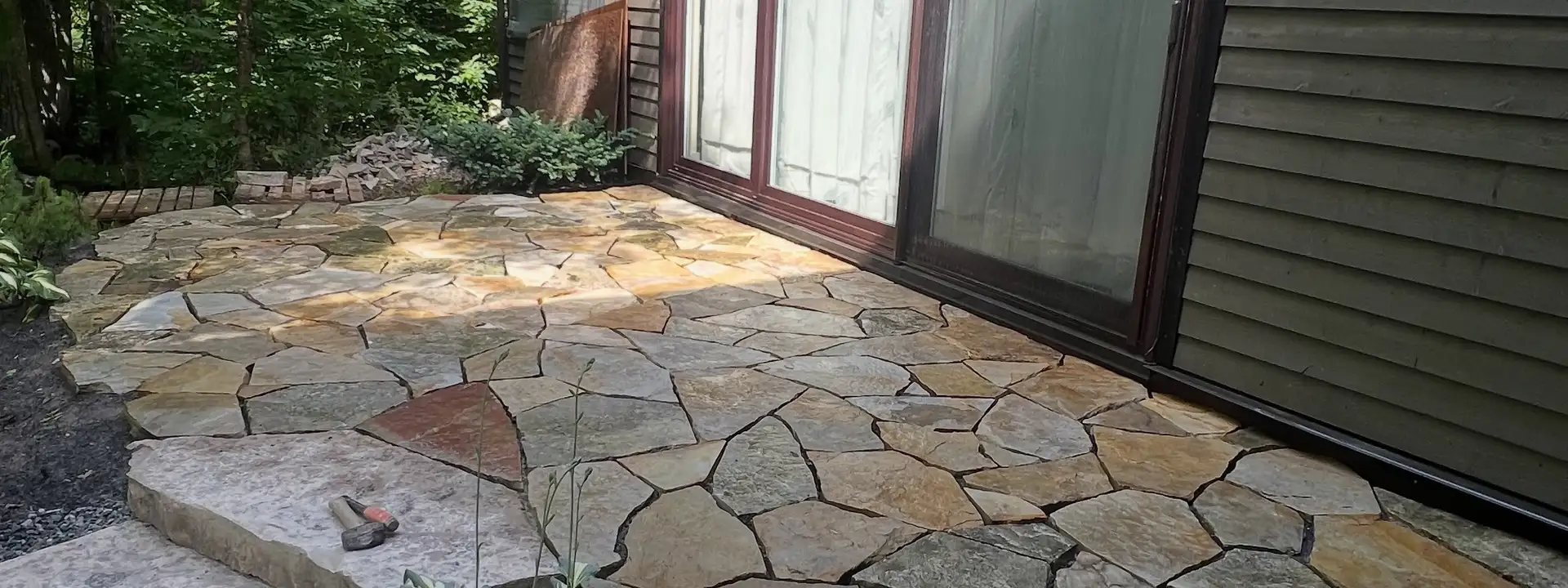
Natural flagstone walkway installation along the side of a house

A walkway does practical work, guiding people from the driveway to the door or from the patio to the garden, but it also sets the tone for the whole landscape. A stone walkway feels more welcoming and permanent than plain concrete.

Paths take more wear per square foot than most patios, and they often run through side yards with drainage challenges. Planning the route, width and base carefully gives you a walkway that stays safe and level.
What Is a Stone Walkway?

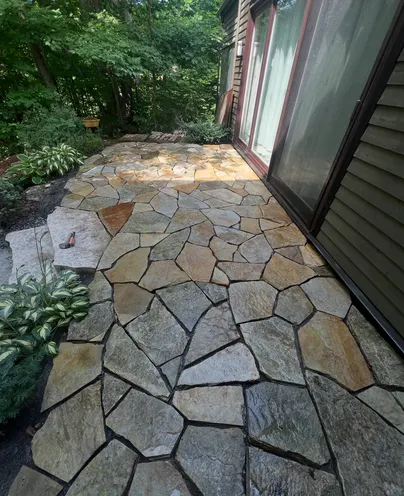
A stone walkway is a path built from natural stone, either as a continuous surface of flagstone or cut stone, or as stepping stones set in gravel, groundcover or lawn. Like patios, walkways can be dry-laid on compacted base or mortar-set on concrete.

Front entry walks are usually continuous and mortar-set or tightly fitted for smooth walking, while garden paths often use stepping stones or wider gravel joints for a softer, more natural look.

If you are comparing options, see our guides to stone retaining wall construction.

Benefits of Stone Walkways

Stone paths combine function, safety and curb appeal.

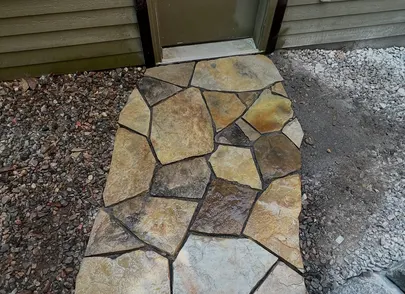
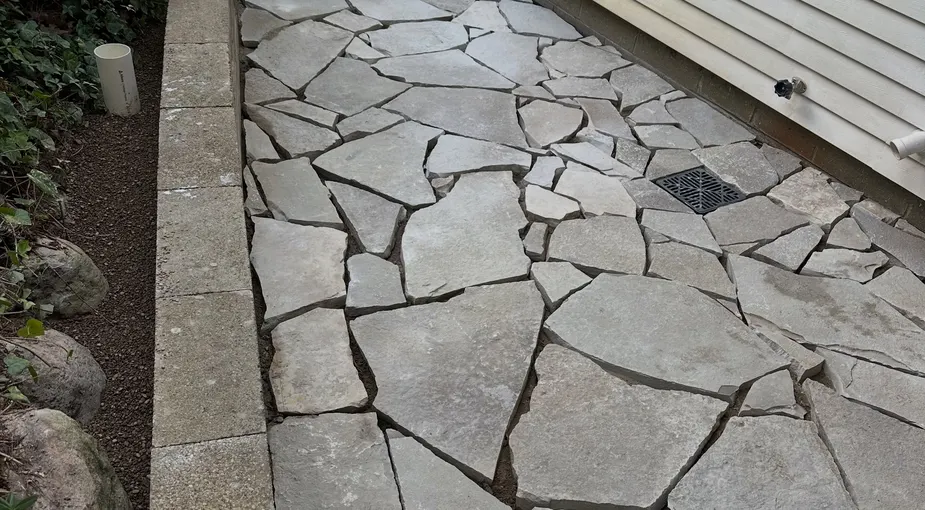
Stone Walkway Installation detail view

Welcoming first impression

A stone entry walk frames the front door and complements a stone facade.

Safer footing

Textured stone offers better grip than smooth concrete when installed with even joints.

Fits tight spaces

Paths work well in narrow side yards and between planting beds.

Easy to extend

Dry-laid paths can be lengthened or rerouted as the garden changes.

Walkway Stone Options

Choose stone for comfort underfoot as well as appearance:

  • Irregular flagstone: Natural shapes fitted together for a classic, organic path.
  • Cut bluestone or sandstone: Rectangular pieces for straight, formal entry walks.
  • Stepping stones: Large single stones set in gravel or groundcover for garden paths.
  • Stone with gravel or pebble joints: Wider joints for permeability and a relaxed look.

Where Stone Walkways Work Best

Typical stone walkway projects include:

Front entry walks from driveway to door

Side-yard paths to gates and utility areas

Garden paths through planting beds

Connections between patio areas

Stepping-stone paths across lawns

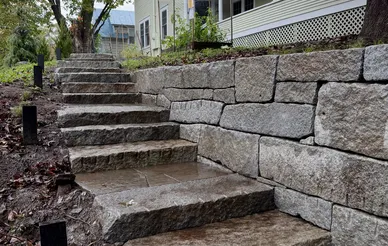
Paths that transition into stone steps

Stone Walkway Installation Process

A walkway that stays level depends on base and drainage more than on the stone.

01

Route and width planning

The path is laid out for comfortable walking width and natural movement, with slope set for drainage.

02

Excavation and edging

Soil is removed to the right depth and edges are defined where needed.

03

Base installation

Base rock is compacted in layers, or a concrete base is placed for mortar-set walks.

04

Stone setting and joints

Stones are fitted and leveled to avoid trip edges, then joints are filled.

Stone Walkway Installation process

Walkway Cost Factors

Walkway quotes depend on length, construction method and site conditions:

Length and width. Total square footage is the starting point for any quote.

Construction method. Mortar-set walks on concrete cost more than dry-laid paths or stepping stones.

Stone selection. Cut stone and thicker flagstone cost more than standard irregular flagstone.

Demolition. Removing an old concrete or paver walkway adds labor and disposal.

Slopes and steps. Grade changes may require steps, landings or retaining edges.

Every project is quoted after a site visit or detailed photos. East West Stone does not set contractor pricing.

Price Guide

Stone Walkway Installation Price Ranges

These are published national-average installed costs from independent cost guides, not prices set by East West Stone or any contractor. Use them to sanity-check quotes; your actual price depends on the factors above and on local labor rates in San Diego County.

Stone Walkway Installation typical installed cost ranges
WorkTypical rangeUnitSource
Flagstone walkway, 1" stone on 6" gravel base and sand bedEdge border and polymeric sand joints included. $29.53 – $37.75 per sq ft [1]
Natural granite pattern-stone walkway, 5/4" thick, on gravel and sandEdge border and polymeric sand joints included. $20.67 – $27.59 per sq ft [2]

Example budgets (our calculation from the per-unit ranges above)

  • 3 ft x 40 ft flagstone walkway (120 sq ft)$3,544 – $4,530
  • 3 ft x 40 ft granite pattern-stone walkway (120 sq ft)$2,480 – $3,311

What these ranges assume: basic mid-range work by experienced professionals in readily accessible conditions, with materials and delivery included. They exclude sales tax, permits and inspections, removal or repair of existing structures, and general contractor overhead, which the sources suggest adds 13% to 22% when a general contractor supervises.

Sources (checked October 2026):

Frequently Asked Questions

Stone Walkway Installation FAQ

Main entry walks are often wide enough for two people to walk side by side, while garden paths can be narrower. Your designer or contractor can suggest a width that fits the space and use.

Continuous paths are better for main routes, strollers and anyone with limited mobility. Stepping stones suit occasional garden routes.

A well-compacted base, landscape fabric in the right places and polymeric sand or mortar joints all reduce weeds. Planted joints are an option if you prefer a green look.

Yes. Using the same stone ties spaces together. See our flagstone patio installation page for patio options.

Project Gallery

Examples of This Work

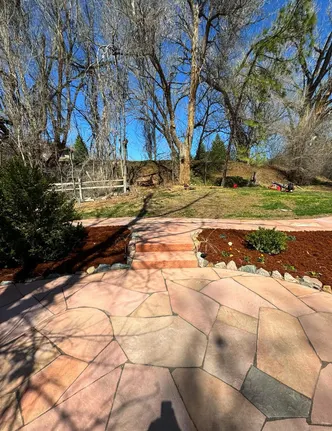
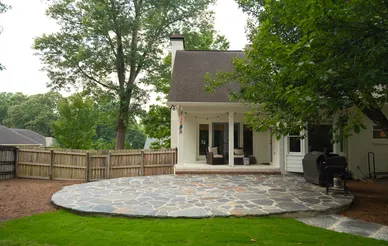
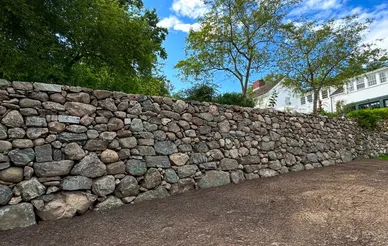
Example photos illustrate the type of work; they are not presented as East West Stone projects. Browse the full project gallery.

Related Services

Related Stone Services

Want a stone path that lasts? Request a free walkway estimate. Request a Free Estimate