Natural Stone Veneer Installation for Homes and Fireplaces

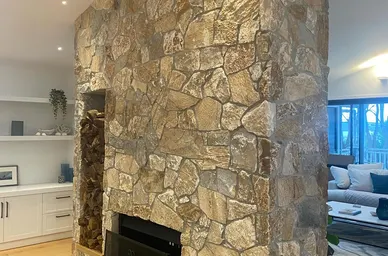
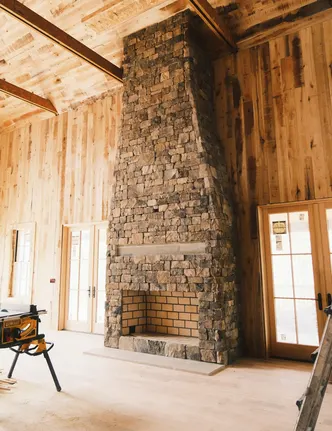
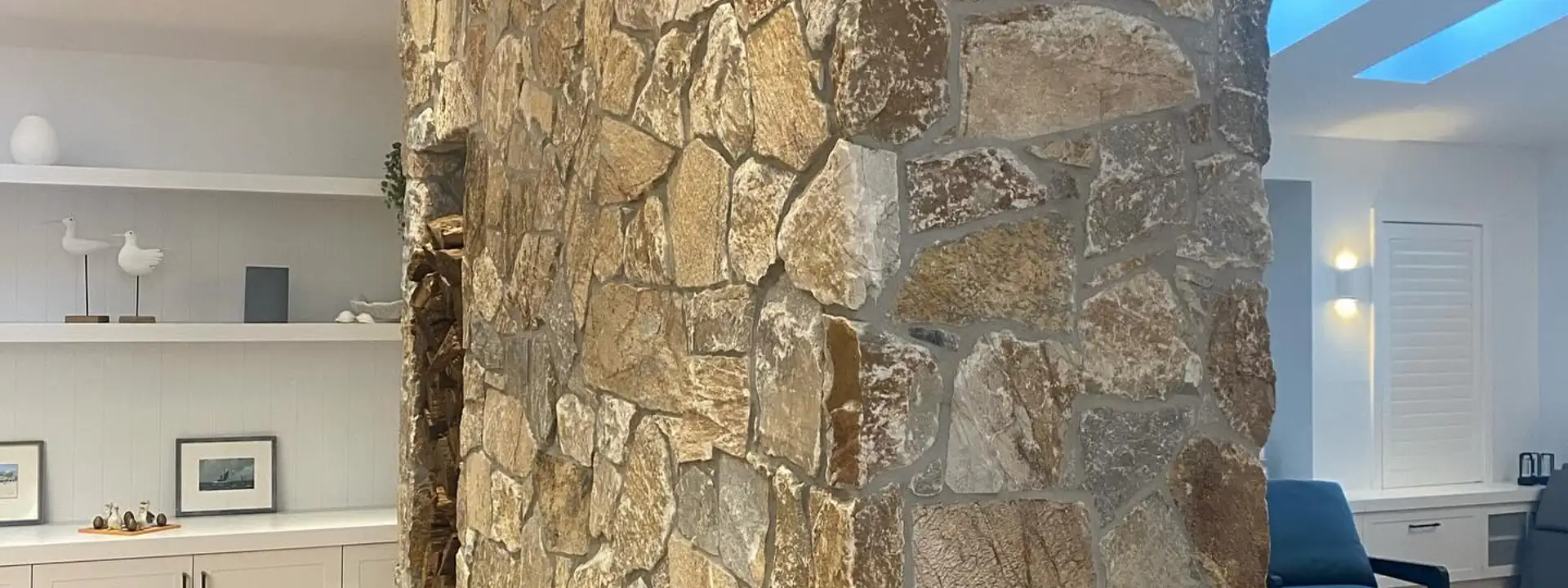
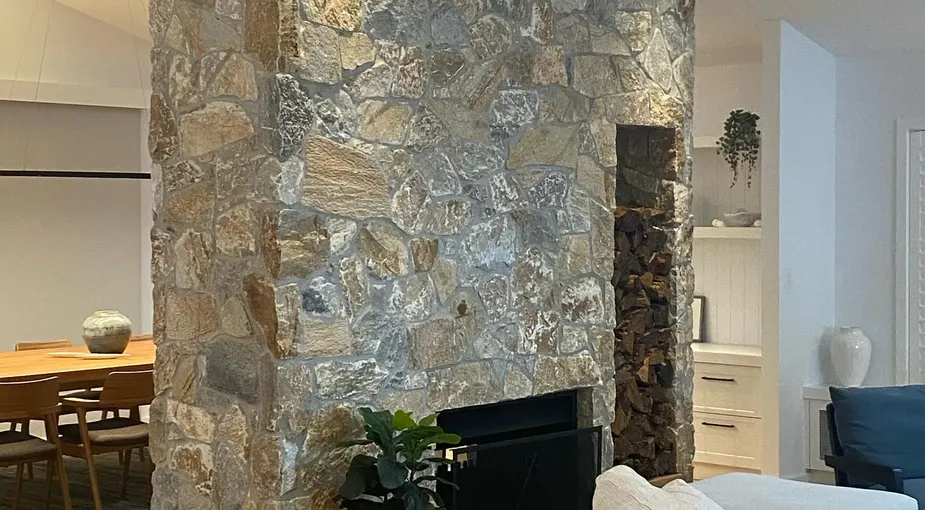
Natural stone veneer fireplace wall with irregular quarried stone

If you want stone that looks real because it is real, natural stone veneer is the material to consider. Each piece is cut from quarried rock, so color, texture and mineral detail vary the way they do in nature. No two walls come out exactly alike.

Natural veneer also connects directly to the history of this domain: East West Stone was once known for natural ledgestone and veneer panels in finishes such as Bayside Waters and Autumn Rose. Today the site focuses on helping property owners in San Diego County plan natural stone veneer installation and find qualified installers.
What Is Natural Stone Veneer?

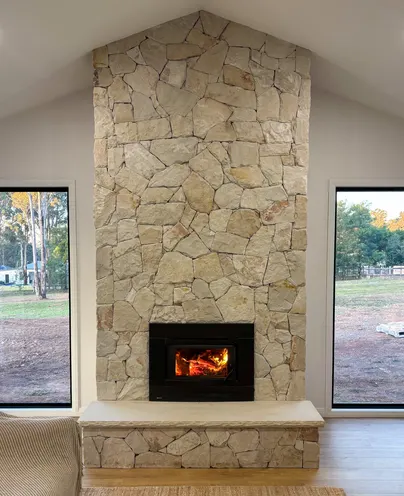
Natural thin stone veneer is real stone, such as quartzite, slate, granite, sandstone or limestone, sawn to a thickness of roughly 3/4 inch to 1-1/2 inches. Thin veneer typically has a sawn back so it can be adhered with mortar like other adhered veneers. Corner pieces are cut as L-shapes so the wall looks like full-depth stone from the side.

Full-bed natural stone is a different system: thicker stones laid like traditional masonry that need a footing or ledge and wall ties. Most residential remodels use thin veneer because it works on existing walls without new foundations.

If you are comparing options, see our guides to manufactured stone veneer installation.

Why Choose Natural Stone Veneer

Natural stone costs more than cast products, but it offers qualities that are hard to imitate.

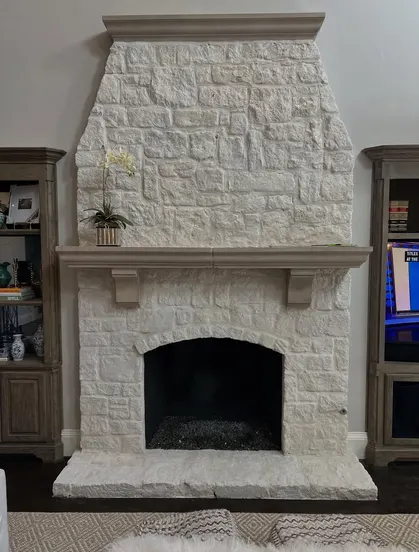
Natural Stone Veneer Installation detail view

Authentic variation

Natural color shifts, veining and surface texture make the wall look less repetitive than molded stone.

Color that does not fade

The color is part of the stone, so it does not rely on surface pigments that can weather over time.

Through-body durability

A chip in natural stone shows more stone, not a different core material.

Wide design range

From light limestone to dark slate ledgestone, natural veneer suits traditional, rustic and modern homes.

Common Natural Veneer Stones

Natural veneer is sold by stone type, color blend and cut style. These are the most common options:

  • Quartzite: Hard, dense and often sparkling with mica; popular in ledgestone panels and stacked patterns.
  • Slate: Dark grays, rusts and blues with a layered face; historically used in many ledgestone panel lines.
  • Limestone and sandstone: Warm, soft tones for cut ashlar, Tuscan and Mediterranean styles.
  • Granite and fieldstone: Rugged, irregular pieces for rustic chimneys, walls and mountain-style homes.

Applications for Natural Stone Veneer

Natural thin veneer works almost anywhere adhered veneer is allowed:

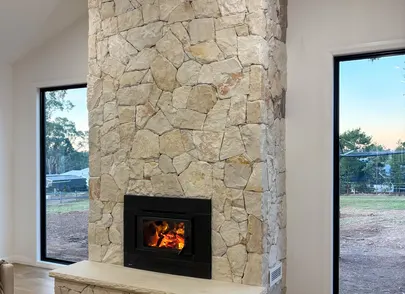
Fireplace surrounds and full-height chimney breasts

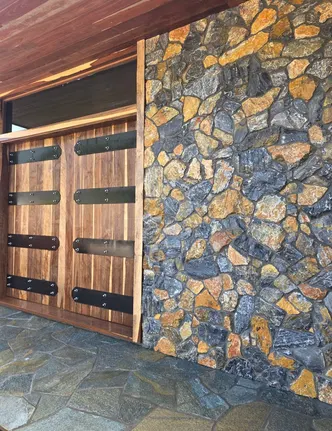
Exterior wainscots and entry walls

Interior feature walls in living rooms and stairwells

Kitchen islands, range hoods and bar fronts

Columns, pilasters and porch piers

Pool walls, spa surrounds and water features

How Natural Stone Veneer Is Installed

Natural stone requires more sorting and fitting than manufactured stone because pieces vary in size and thickness.

01

Stone selection and mock-up

Review samples or a small mock-up board so you see the real color range before the full order is placed.

02

Substrate preparation

The wall is prepared with moisture protection, lath and a scratch coat, or cleaned and roughened if it is existing masonry.

03

Sorting and dry layout

Stones are spread out and blended from several crates so colors are mixed evenly across the wall.

04

Setting, jointing and sealing

Each piece is back-buttered and pressed into mortar; joints are finished and a breathable sealer may be applied.

Natural Stone Veneer Installation process

What Affects the Cost of Natural Stone Veneer

Natural veneer pricing varies widely by stone and region. A fair quote will reflect these factors:

Stone species and blend. Rare colors and premium quartzites cost more than common sandstone or slate blends.

Thin veneer vs. full-bed stone. Full-bed stone needs footings and ties, which adds structural work and labor.

Piece format. Panels install faster than individual irregular stones that must be fitted one by one.

Corner ratio. Natural corner pieces are cut from larger blocks and are priced higher than flats.

Freight and waste. Natural stone is heavy, and some waste from cutting and sorting is normal.

Every project is quoted after a site visit or detailed photos. East West Stone does not set contractor pricing.

Price Guide

Natural Stone Veneer Installation Price Ranges

These are published national-average installed costs from independent cost guides, not prices set by East West Stone or any contractor. Use them to sanity-check quotes; your actual price depends on the factors above and on local labor rates in San Diego County.

Natural Stone Veneer Installation typical installed cost ranges
WorkTypical rangeUnitSource
Natural thin stone veneer, 1" irregular, over paper, lath and scratch coatBasic mid-range labor, favorable site; 129 sq ft example. $25.76 – $32.92 per sq ft [1]
Natural stacked stone (ledgestone) panels, 6" x 24", set in mortar over lathBasic mid-range labor, favorable site; 129 sq ft example. $29.60 – $37.60 per sq ft [2]

Example budgets (our calculation from the per-unit ranges above)

  • 100 sq ft interior feature wall, natural thin veneer$2,576 – $3,292
  • 100 sq ft wall, natural stacked stone panels$2,960 – $3,760

What these ranges assume: basic mid-range work by experienced professionals in readily accessible conditions, with materials and delivery included. They exclude sales tax, permits and inspections, removal or repair of existing structures, and general contractor overhead, which the sources suggest adds 13% to 22% when a general contractor supervises.

Sources (checked October 2026):

Frequently Asked Questions

Natural Stone Veneer Installation FAQ

Usually yes, though thin natural veneer is cut to stay within the weight limits used for adhered veneer systems. Your installer should confirm that the stone and substrate system you choose is suitable for the wall.

Not always. Dense stones like quartzite often perform well unsealed, while softer stones near pools, kitchens or sprinklers may benefit from a breathable penetrating sealer. Avoid film-forming sealers that trap moisture.

Yes, but matching is difficult. Bring a photo and, if possible, a loose piece of the existing stone to the supplier. Blending at a corner or using a contrasting accent can look more intentional than a near-match.

No, and that is the point. Expect variation in color and size. Blending from multiple crates during installation keeps the variation even across the wall.

Project Gallery

Examples of This Work

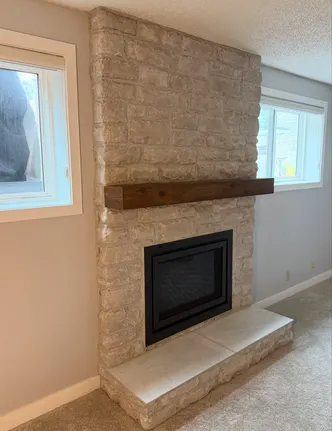
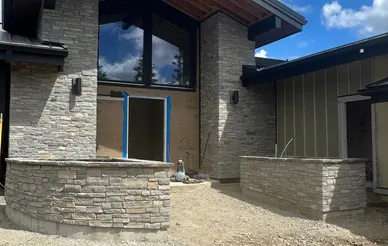
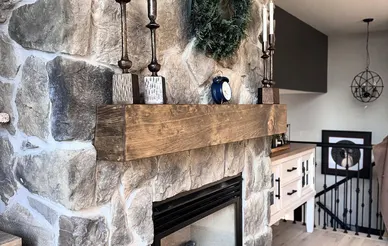
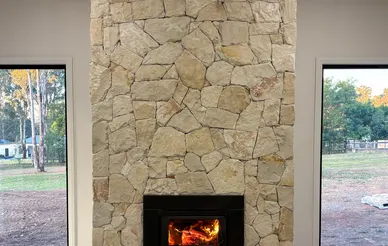
Example photos illustrate the type of work; they are not presented as East West Stone projects. Browse the full project gallery.

Related Services

Related Stone Services

Want the look of real quarried stone? Request a free estimate for natural stone veneer. Request a Free Estimate